


Self-driving vehicles are still a relatively new concept that have yet to be fully automated and proven 100% safe. Recent news reports of Tesla providing misleading ‘Full Self-Driving’ safety data to regulators and Waymo recalling nearly 3,900 robotaxis over the risk of entering closed construction zones have highlighted the concern that these autonomous vehicles can still make mistakes, cause accidents and injuries to passengers. Unsurprisingly, when a self-driving car accident occurs, it is not an ordinary car accident. They involve multiple potentially liable parties, proprietary software, and technology companies with enormous legal resources.
What Makes EV and Autonomous Vehicle Accidents Different?
Traditional car accident claims typically involve two drivers and their insurance companies. EV and self-driving car accidents layer in software developers, hardware manufacturers, fleet operators, and data systems that most injury victims have never had to deal with before.
When a Tesla operating in Full Self-Driving (FSD) or Autopilot mode causes a collision or when a Waymo robotaxi makes a catastrophic navigation error, determining who bears legal responsibility requires a fundamentally different approach. Our attorneys understand this landscape and bring the investigative resources necessary to pursue every potentially liable party on your behalf.
Who Can Be Held Responsible When EV or Autonomous Vehicle Technology Fails?
The Vehicle Manufacturer
Automakers like Tesla, Rivian, and General Motors (the maker of Cruise) design and sell vehicles with automated systems they market as safe. When those systems have a defect, fail to perform as advertised, or cause a crash under conditions they were designed to handle, the manufacturer can face product liability claims.
For example, Tesla has faced federal investigations and lawsuits related to failures of Autopilot and Full Self-Driving, including crashes into stationary emergency vehicles and phantom braking events. Rivian’s driver-assistance systems are newer to market, which means less real-world testing and a higher potential for undiscovered defects.
The Autonomous Vehicle Technology Company
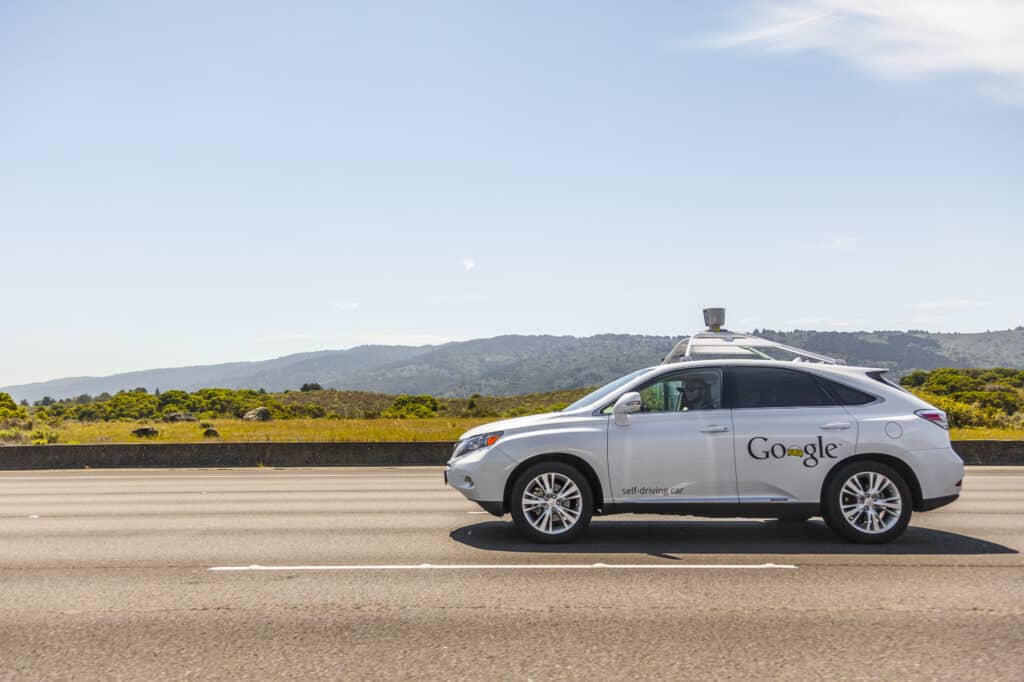
Waymo, operated by Alphabet (Google’s parent company), deploys fully driverless robotaxis in select U.S. cities. Other autonomous vehicle developers, including Mobileye and Aurora, provide the software “stack” that powers self-driving systems in third-party vehicles. When the technology itself causes a crash, the company that developed and deployed it bears potential liability separate from the vehicle manufacturer.
The Fleet Operator or Ride-Share Company
Autonomous and semi-autonomous vehicles often operate within commercial fleets. Waymo vehicles operate as a ride-share service. Commercial EV fleets are expanding rapidly in Rhode Island and Massachusetts across delivery, logistics, and transportation services. A fleet operator who fails to maintain vehicles, ignores known software defects, or fails to properly supervise autonomous operations bears its own liability exposure.
A Negligent Human Driver
Even in a partially automated vehicle, a human driver retains legal responsibility for maintaining awareness and control in many situations. When a driver over-relies on automation, ignores warnings, or engages a driver-assistance system in conditions it is not designed for, that driver can be found negligent.
A Government Entity or Road Authority
Autonomous vehicles depend on well-marked lane lines, clear signage, and predictable road conditions. Poorly maintained roads, missing lane markings, and construction zone configurations that confuse automated systems can create liability for the government entity responsible for that roadway.
Common Types of Electric Vehicle and Self-Driving Car Accidents We Handle
Our auto accident attorneys represent injury victims across Rhode Island and Massachusetts in cases involving:
- Autopilot and Full Self-Driving (FSD) Failures: Tesla’s automated systems have caused crashes when vehicles failed to detect stopped emergency vehicles, misjudged the speed or position of other cars, or accelerated unexpectedly. These cases often involve data downloaded directly from the vehicle’s onboard systems. The experienced car accident attorneys at d’Oliveira & Associates have plenty of experience requesting this data and utilizing it.
- Phantom Braking: Sudden, unexplained braking in semi-autonomous vehicles can cause rear-end collisions with no warning. Multiple Tesla owners and other EV drivers have reported this defect to the National Highway Traffic Safety Administration (NHTSA). If your EV braked suddenly and caused a chain-reaction crash, you may have a product liability claim.
- Battery Fire Accidents: EV lithium-ion battery packs can ignite after a collision, during charging, or, in some cases, spontaneously. Battery fires burn at extremely high temperatures and can reignite hours or days after being extinguished. Accordingly, injuries from EV battery fires are often catastrophic, including severe burns and smoke inhalation. These cases frequently involve product liability claims against the battery manufacturer or the automaker.
- Software Update Failures: EV manufacturers push over-the-air (OTA) software updates that can alter how a vehicle handles, brakes, accelerates, and executes automated features. When a software update introduces a defect that causes a crash, the update itself becomes critical evidence. Our attorneys know how to preserve and examine this digital record.
- Charging Station Defects: Defective commercial or residential charging equipment can cause electrical fires, electric shock injuries, and explosion risks. Property owners, charging network operators, and equipment manufacturers can all face liability depending on the circumstances.
- Autonomous Vehicle Pedestrian and Cyclist Accidents: Self-driving vehicles have caused pedestrian fatalities and serious cyclist injuries. These accidents raise profound liability questions about the adequacy of sensor arrays, machine learning training data, and real-time hazard detection.
- EV Accidents Caused by Distracted Human Operators: Drivers who treat semi-automated systems as fully self-driving often divert their attention from the road entirely. Therefore, when this inattention contributes to a crash, the driver faces traditional negligence liability even in a high-tech vehicle.
Rhode Island and Massachusetts Laws That Apply to EV and Autonomous Vehicle Claims
Product Liability Law
Both Rhode Island and Massachusetts recognize product liability claims when a defective self-driving car causes injury. Therefore, you do not need to prove the manufacturer acted carelessly. Instead, you need to establish that the product was defective, that the defect caused your injury, and that you suffered damages as a result. Our attorneys pursue these claims using engineering experts, vehicle data analysts, and industry specialists.
Negligence Law
Standard negligence principles apply to human drivers, fleet operators, and maintenance providers involved in EV and autonomous vehicle crashes. Rhode Island and Massachusetts both use comparative fault rules, meaning your compensation may be reduced if you are found partially at fault. Our attorneys work to build the strongest possible picture of liability on your behalf.
Federal Regulatory Standards
The NHTSA oversees autonomous vehicle safety at the federal level and maintains a database of EV and self-driving crash reports that can support your claim. Our legal team monitors federal investigations and enforcement actions that may be directly relevant to your case.
Data Preservation in Rhode Island and Massachusetts
Modern EVs are rolling data centers. They record steering inputs, braking events, speed, battery state, driver engagement, and often camera footage. This data is critical evidence, and it can be overwritten or lost. Therefore, our attorneys send preservation letters immediately upon being retained to protect this evidence before it disappears.
Why Do These Cases Require Specialized Legal Representation?
EV and autonomous vehicle litigation is one of the most technically complex areas of personal injury law. In addition, companies like Tesla, Waymo, and Rivian have entire legal departments and unlimited resources dedicated to defending these claims. For instance, they will argue that their software performed correctly, that the driver failed to maintain proper attention, or that road conditions were responsible.
Our auto accident attorneys in Rhode Island and Massachusetts at d’Oliveira & Associates counter these arguments by working with qualified accident reconstruction specialists, automotive engineers, and software forensics experts. We know which questions to ask, which data to request, and how to translate highly technical evidence into clear, persuasive arguments for judges and juries.
In addition, we understand the devastating impact injuries from a self-driving car accident have on your life. Crash injuries from high-speed autonomous vehicle failures, EV battery fires, or sudden phantom braking events can result in traumatic brain injuries, spinal cord damage, severe burns, and permanent disability. You deserve representation that fights as hard for your recovery as the technology companies fight for their bottom line.
Talk to a Rhode Island and Massachusetts EV Accident Lawyer Today
The legal landscape for electric and autonomous-vehicle accidents is evolving rapidly, and the technology companies responsible for these crashes count on injury victims not knowing their rights. Our attorneys at d’Oliveira & Associates stay ahead of the developments in this area of law so we can protect you.
Additionally, d’Oliveira & Associates operates 19 office locations throughout Rhode Island and Massachusetts. Call us today at 1-800-992-6878 or fill out our online form to request a free personal injury consultation. We will evaluate your case, explain your options after a car accident in Rhode Island or Massachusetts, and give you an honest assessment of the path forward.
Sources
- https://www.cbsnews.com/news/waymo-recall-robotaxi-closed-freeway-construction-zone/
- https://www.reuters.com/world/tesla-presented-misleading-full-self-driving-safety-data-european-regulators-2026-06-15/
- https://www.kbb.com/car-advice/self-driving-cars/

📞 (401) 200-3849 | 🌐 www.good-legal-advice.com