



If you were injured in a Lyft accident, you need clear answers and strong legal help now. The experienced Rhode Island car accident attorneys at d’Oliveira & Associates are ready to review your situation and explain your options. Contact d’Oliveira & Associates by calling (401) 431-1990 or contacting us online for a free consultation.
Rhode Island Lyft Accidents: What You Need to Know
Lyft Accident Lawyer in Rhode Island
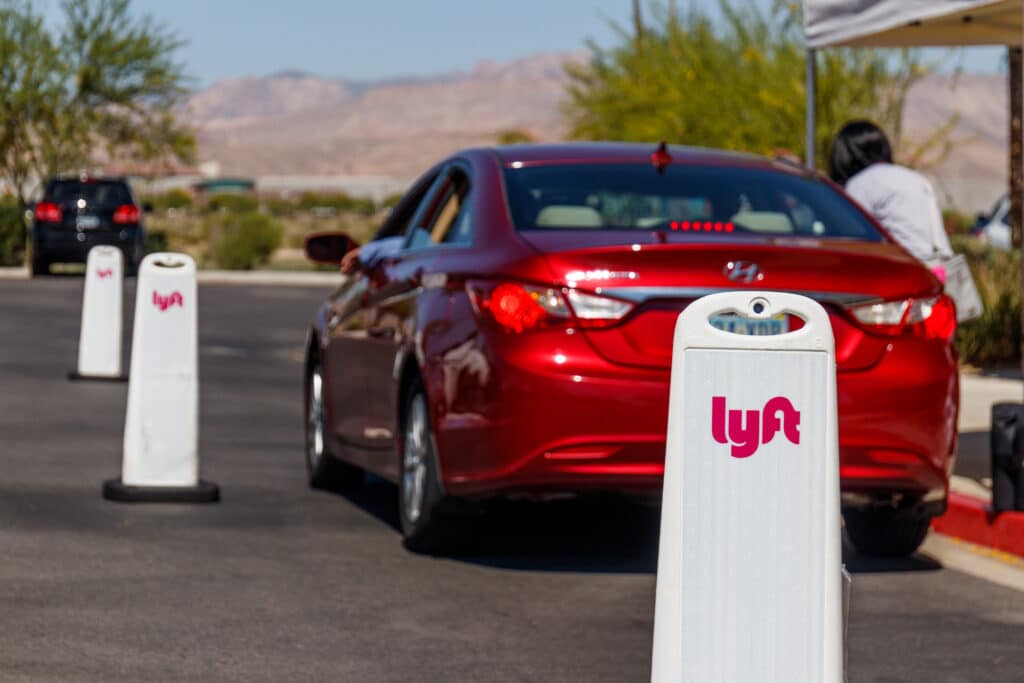
When a crash involves a Lyft vehicle, everything changes at once. You are no longer dealing with a standard accident or a straightforward insurance claim, but a rideshare system controlled by app data, shifting coverage, and corporate insurers whose priority is protecting Lyft, not you. Whether you were inside the Lyft, driving your own car, or hit as a pedestrian, these cases move fast and leave many victims confused, pressured, and unsure of their rights.
For more than forty years, the experienced attorneys at d’Oliveira & Associates have represented injured people across Rhode Island and know how Lyft accident cases are handled on local streets, highways, and in Rhode Island courts. With offices throughout the state and decades of experience dealing with powerful insurance companies, they take a tough, hands-on approach to protecting victims. Below, this piece explains how Lyft accidents happen, who may be at fault, the legal options available, the types of financial compensation that may be pursued, and how a Rhode Island Lyft accident lawyer from d’Oliveira & Associates can fight on your behalf to seek compensation and justice.
What Lyft Is and How the Rideshare Service Work
Lyft is a rideshare company that connects drivers with passengers through a mobile phone application. Instead of hailing a taxi or calling a car service, users request a ride through the Lyft app, which matches them with a nearby driver using their personal vehicle. Lyft operates throughout Rhode Island, including Providence, Warwick, Cranston, and surrounding communities.
How Lyft Drivers Operate — Lyft drivers are not traditional taxi drivers. They use their own vehicles and decide when to log into the app and accept ride requests. A driver may be waiting for a request, driving to pick up a passenger, or transporting someone to a destination. The driver’s activity in the app at any given moment affects how the ride is classified and how insurance coverage applies.
How Lyft Rides Begin and End — A Lyft ride officially starts when a driver accepts a request and continues until the passenger exits the vehicle. Pickups and drop-offs often occur in busy areas such as downtown streets, near colleges, airports, restaurants, and event venues. Because Lyft relies on app-based navigation and frequent stops, drivers often make sudden turns, stops, or lane changes.
Why Lyft Accidents Are Different — Lyft’s app-based system creates situations that do not exist in traditional driving. Drivers frequently interact with their phones for navigation and ride management, which can increase distraction and raise safety concerns on Rhode Island roads.
Types of Lyft Accidents in Rhode Island
Injured as a Lyft Passenger — When you are riding inside a Lyft, the app is on and the ride is active from pickup until drop-off. Passenger crashes often happen because drivers are distracted by navigation prompts, rushing between rides, or driving aggressively in congested areas like Providence, Warwick, and Cranston. These accidents include rear-end collisions, intersection crashes, and highway accidents. From an insurance standpoint, this is the most protected phase, because Rhode Island law requires Lyft to provide up to $1,500,000 in liability coverage when a ride is in progress.
Hit by a Lyft Driver While Driving Your Own Car — You can be injured when a Lyft driver crashes into your vehicle during any phase of Lyft activity. Some crashes happen while the driver is transporting a passenger or heading to a pickup, triggering Lyft’s $1,500,000 policy. Others occur when the driver is logged into the app and waiting for a ride request, which may limit coverage to $50,000 per person and $100,000 per accident. If the app is completely off, only the driver’s personal auto insurance applies. The accident itself may look ordinary, but the insurance situation is not.
Struck by a Lyft While Walking or Biking — Pedestrians and cyclists are often hit by Lyft drivers who are scanning the app for ride requests, slowing suddenly for pickups, or making abrupt turns near crosswalks. These accidents are common near colleges, downtown districts, and nightlife areas throughout Rhode Island. Insurance coverage again depends on app status. If the driver was on a ride or en route to a passenger, higher Lyft coverage may apply. If the driver was waiting for a request or off-app, available coverage may be significantly lower.
Involved in a Multi-Vehicle Lyft Accident — Multi-car Lyft accidents frequently happen on highways like I-95 or in heavy traffic during rush hour. These crashes often begin when a Lyft driver follows too closely, brakes suddenly, or changes lanes while focused on the app. Multiple people may be injured, making insurance limits especially important. Whether Lyft’s high-limit policy applies depends on whether the driver was on an active ride, waiting for a request, or driving personally at the time.
Hurt While Entering or Exiting a Lyft Vehicle — Lyft accidents do not always happen at speed. You can be injured during pickup or drop-off if a driver stops in traffic, pulls away too quickly, or drops you off in an unsafe location. These incidents usually occur while the ride is active, meaning Lyft’s higher insurance coverage generally applies. These injuries are common in crowded city streets where curb access is limited.
Injured by a Lyft Driver With the App On but No Passenger — Some accidents happen while a Lyft driver is logged into the app and waiting for a ride request. Drivers may circle neighborhoods, make sudden stops, or drive distracted while watching the app. During this phase, Lyft provides only limited liability coverage, which can be a serious problem for victims with significant injuries.
Killed in a Fatal Rhode Island Lyft Accident — Fatal Lyft accidents may involve passengers, workers, other drivers, pedestrians, or cyclists. These tragedies can occur during any app phase, but insurance coverage depends entirely on whether the driver was actively working. When a fatal crash happens during an active ride or pickup, Lyft’s $1,500,000 policy can be critical for surviving family members pursuing wrongful death claims.
Injuries Commonly Caused by Lyft Crashes in Rhode Island

Traumatic Brain Injuries and Concussions — Even a low-speed Lyft accident can cause your head to strike a window, headrest, or another part of the vehicle. Concussions and more serious brain injuries are common, especially for passengers sitting in the back seat who are unprepared for impact.
Neck and Back Injuries — Sudden stops and rear-end collisions frequently lead to whiplash, herniated discs, and other spinal injuries. These injuries may not feel severe right away but can worsen over time and interfere with your ability to work or perform daily activities.
Broken Bones and Orthopedic Injuries — Lyft accidents often result in fractures to the arms, legs, ribs, or hips, particularly in side-impact or multi-vehicle crashes. Pedestrians and cyclists struck by Lyft vehicles are at even higher risk of serious bone injuries.
Internal Injuries — The force of a collision can cause internal bleeding or damage to organs, even when there are few visible signs of injury. These injuries are especially dangerous because they may not be immediately obvious after the crash.
Psychological and Emotional Injuries — Many Lyft accident victims experience anxiety, fear of riding in vehicles, sleep disturbances, or post-traumatic stress after a serious crash. These emotional injuries can be just as disruptive as physical harm, particularly after violent or fatal accidents.
Where Lyft Accidents Commonly Happen in Rhode Island
Providence and Downtown Traffic Areas — Many Lyft accidents in Rhode Island happen in Providence, especially in the downtown area where traffic is dense and constantly changing. Accidents are common near college campuses, hospitals, shopping districts, and nightlife areas where Lyft pickups and drop-offs happen frequently. One-way streets, tight intersections, pedestrians, and cyclists all increase the risk of collisions, particularly when drivers are focused on the app instead of their surroundings.
Warwick and Airport-Related Roads — Warwick sees a high number of Lyft accidents due to traffic around T.F. Green International Airport and nearby hotels. Lyft drivers are often navigating unfamiliar roads while managing pickups, luggage stops, and heavy congestion. Accidents commonly occur on Route 37, Post Road, and surrounding connectors where drivers make sudden turns or stop abruptly to locate passengers.
Cranston and Busy Commuter Routes — Lyft accidents in Cranston frequently occur along major commuter roads such as Reservoir Avenue and Route 10. These roads carry heavy traffic during peak hours, increasing the likelihood of rear-end collisions and intersection crashes. Lyft drivers in these areas often balance frequent ride requests with stop-and-go traffic, creating dangerous conditions for everyone on the road.
Pawtucket and Central Falls — Dense neighborhoods and closely spaced intersections make Pawtucket and Central Falls high-risk areas for Lyft accidents. Drivers often encounter limited parking, narrow streets, and frequent pedestrian activity. Accidents are especially common near downtown Pawtucket, local event venues, and areas where Lyft drivers stop unexpectedly to pick up or drop off riders.
East Providence and River-Adjacent Roads — Lyft accidents in East Providence often occur on busy arterial roads and bridge access points connecting to Providence. These areas experience heavy traffic flow, limited shoulder space, and frequent lane changes, which can be dangerous when drivers are following app directions or responding to ride alerts.Highways and Tourist Corridors Across Rhode Island — Lyft accidents also happen on major highways such as I-95, I-195, and Route 4, especially during rush hour or tourist season. Drivers unfamiliar with high-speed merging and sudden traffic slowdowns may cause serious crashes. Tourist destinations, beaches, and seasonal events further increase traffic and accident risk throughout the state.
Who May Be Liable for a Rhode Island Lyft Accident
The Lyft Driver May Be Liable Under Rhode Island Negligence Law — If a Lyft driver causes a crash by speeding, driving distracted, failing to yield, or violating traffic laws, you can hold that driver legally responsible under Rhode Island negligence law. Rhode Island follows a pure comparative negligence system under R.I. Gen. Laws § 9-20-4, which means you can still recover compensation even if you were partially at fault, though your recovery may be reduced by your percentage of fault.
Lyft’s Insurance Coverage May Apply Under Rhode Island’s Rideshare Law — Rhode Island has a specific statute governing rideshare companies like Lyft. Under R.I. Gen. Laws § 39-14.2-14, Lyft is required to provide insurance coverage when a driver is logged into the app. If the driver is logged in and waiting for a ride request, the law requires at least $50,000 per person and $100,000 per accident for bodily injury, plus $25,000 for property damage. If the driver is en route to pick up a passenger or actively transporting one, the statute requires at least $1,500,000 in liability coverage. This law is central to nearly every Rhode Island Lyft accident case.
Uninsured and Underinsured Motorist Coverage May Apply — The Rhode Island rideshare statute also requires uninsured and underinsured motorist coverage during Lyft driving periods to the extent required by state insurance law, including R.I. Gen. Laws § 27-7-2.1. This coverage can be critical if the at-fault driver does not have insurance or does not have enough insurance to cover your injuries.
Another Driver May Share Fault for the Lyft Accident — Many Lyft accidents involve more than one negligent driver. If a third-party driver caused or contributed to the crash, you may pursue a claim against that driver as well. Rhode Island’s comparative negligence statute, R.I. Gen. Laws § 9-20-4, allows responsibility to be divided among multiple parties based on their share of fault.
The Vehicle Owner May Be Liable Under Rhode Island Law — If the Lyft driver was operating a vehicle owned by someone else, Rhode Island’s owner liability law may apply. Under R.I. Gen. Laws § 31-33-6, the owner of a motor vehicle can be held liable for injuries caused by someone driving the vehicle with the owner’s permission, even if the owner was not present.
A City, Town, or the State May Be Liable for Dangerous Roads — Some Lyft accidents are caused in part by dangerous road conditions, such as missing signage, malfunctioning traffic signals, or poorly maintained roads. Claims against government entities fall under the Rhode Island Tort Claims Act, R.I. Gen. Laws § 9-31-1, which waives sovereign immunity but also places limits on damages. For claims against the state, cities, or towns, damages are commonly capped under R.I. Gen. Laws §§ 9-31-2 and 9-31-3, subject to specific conditions.
Statute of Limitations for Rhode Island Lyft Accident Claims — Rhode Island law strictly limits how long you have to file a lawsuit. Most Lyft accident injury claims must be filed within three years of the accident under R.I. Gen. Laws § 9-1-14. Wrongful death claims arising from fatal Lyft accidents are governed by R.I. Gen. Laws § 10-7-2, which also generally imposes a three-year deadline.
How a Rhode Island Lyft Accident Attorney Helps You After a Crash

Your Lyft Accident Case Is Not a Normal Car Accident — Lyft accidents in Rhode Island involve app-based evidence and multiple insurance policies that depend on the driver’s app status. Crashes in Providence, Warwick, Cranston, Pawtucket, and East Providence often trigger corporate insurers that do not exist in ordinary accidents.
Your Lawyer Confirms the Driver’s Lyft App Status — A Rhode Island Lyft accident attorney determines whether the driver was off the app, waiting for a request, or actively transporting a passenger. This step directly affects what insurance coverage applies and how much compensation may be available.
Your Lawyer Handles Lyft and Insurance Companies — Lyft accident claims often involve both personal and corporate insurers. Your lawyer manages all communication, protecting you from pressure tactics and unfair settlement offers, especially after serious crashes on busy Rhode Island roads.
Your Lawyer Uses Local Knowledge to Investigate the Crash — A local Lyft crash lawyer understands Rhode Island traffic patterns, common pickup zones, and accident-prone areas. This knowledge helps uncover how and why the crash happened.
Your Lawyer Pursues Full Compensation — In non-fatal Lyft accident cases, your lawyer seeks damages for medical bills, lost income, pain and suffering, and emotional distress. In fatal accidents, your lawyer seeks wrongful death damages for surviving family members.Your Lawyer Is Ready to File a Lawsuit — If insurers refuse to act fairly, a Rhode Island Lyft accident lawyer is prepared to take your case to court and fight for the compensation you deserve.
Frequently Asked Questions About Lyft Accidents in Rhode Island
Seek medical care, call police, document the scene, gather driver and witness information, report the crash in the Lyft app, and contact a Rhode Island Lyft accident lawyer promptly immediately.
A Lyft accident claim is a legal case you file after a rideshare crash to seek compensation for injuries, lost wages, and damage caused by another driver or Lyft-related circumstances.
Lyft’s insurance varies based on driver app status at the crash moment, with higher coverage when a ride is active or en route compared to when the driver is waiting or off the app.
You should contact a local Lyft accident attorney as soon as possible to preserve evidence, confirm app status, and avoid mistakes when dealing with insurance companies after Rhode Island crashes.
A rideshare injury lawyer can seek compensation for medical bills, lost income, pain and suffering, future care, and wrongful death damages in fatal Rhode Island Lyft accident cases involving serious injuries statewide.
No, you should not speak to Lyft’s insurance company without legal advice, as statements can be used to limit or deny your Rhode Island Lyft accident claim unfairly during negotiations.
Yes, a Rhode Island Lyft accident lawyer can file a lawsuit when insurers refuse fair compensation, using local courts and procedures to protect your rights after serious Lyft crashes occur.
Rhode Island Lyft Accident Lawyer

When you are injured in a Lyft accident, you are not just dealing with a crash—you are suddenly up against a rideshare company, multiple insurance policies, and rules that change based on what the driver was doing in the app. In Rhode Island, these cases move quickly, and insurance companies often look for ways to limit what they pay before you even understand your rights. The experienced Lyft accident attorneys at d’Oliveira & Associates know how Lyft cases work locally, from Providence streets to highway crashes across the state, and they know how to push back when insurers stall or shift blame. To discuss your legal rights and options, contact d’Oliveira & Associates by calling (401) 431-1990 or contacting us online for a free consultation.
Our Firm’s Rhode Island Offices
- Coventry Office
- 401 Arnold Rd., Coventry, RI 02816
- Phone: (401) 823-3444
- Cranston Office
- 751 Reservoir Ave, Cranston, RI 02910
- Phone: (401) 275-2039
- East Providence Office
- 2540 Pawtucket Ave, East Providence, RI 02914
- Phone: (401) 431-1990
- Johnston Office
- 1395 Atwood Ave #209F, Johnston, RI 02919
- Phone: (401) 490-3549
- Middletown Office
- 1521 W Main Rd., Middletown, RI 02842
- Phone: (401) 846-5449
- Pawtucket Office
- 267 Newport Ave., Pawtucket, RI 02861
- Phone: (401) 365-6001
- Portsmouth Office
- 1 Tower Dr. Unit 1505, Portsmouth, RI 02871
- Phone: (401) 343-6340
- Providence Office
- 390 Broadway, Providence, RI 02909
- Phone: (401) 831-8600
- South Kingstown Office
- 117 Main St. 2nd Floor, South Kingstown, RI 02879
- Phone: (401) 490-4332
- Warwick Office
- 120 Lavan St. Suite 1, Warwick, RI 02888
- Phone: (401) 490-6907
- Woonsocket Office
- 345 N. Main St. Suite 1, Woonsocket, RI 02895
- Phone: (401) 762-4006