


The ubiquitous nature and intelligence of smartphones can extend far beyond what many people realize. When people are involved in a car accident, they may not understand that the witnesses and evidence involved in the incident extend beyond human eyes. While being in a car accident is chaotic enough, using the phone to take photos of the evidence is what most people think of first, but the device in your pocket was quietly documenting details before, during and after the crash, often without you touching a single button.
Modern smartphones track location, motion, timing and even sudden impacts. That data can become powerful evidence in a personal injury claim, helping establish when a crash happened, how fast a vehicle was moving, and what the scene looked like in the minutes that followed. For injured drivers and passengers across New England, understanding this hidden record can make a meaningful difference in building a strong case with the help of a top auto accident attorney in Rhode Island and Massachusetts.
How Smartphones Document an Auto Accident
Smartphones run dozens of background processes at any given moment. Many of those processes generate time-stamped records that can help reconstruct the exact sequence of events surrounding a crash.
- GPS and Location History: Most phones continuously log location data through GPS, Wi-Fi signals and cell tower triangulation. This creates a detailed movement history that can show your route, your speed at various points, and the precise location where a collision occurred. Location data can confirm you were traveling within the speed limit, verify you were stopped at a red light, or establish that another driver’s vehicle was in the position they later disputed.
- Accelerometer and Motion Sensors: Every smartphone contains an accelerometer, a sensor that measures sudden changes in speed and direction. These sensors are sensitive enough to detect the exact moment of impact in a collision. Apple and many Android devices now use this data to power crash detection features that can automatically call emergency services. That same sensor data can later serve as an objective record of impact force and timing, information that supports arguments about the severity of the collision.
- Timestamps on Photos and Communications: Every photo your phone captures includes metadata showing the exact time and location it was taken. If you photographed the damage to your vehicle, the road conditions or your injuries, those timestamps create a verified timeline. Text messages, call logs and app notifications carry similar time-stamped records, which can confirm whether you were using your phone at the time of the crash or establish that you were not.
- Health and Fitness App Data: Apps that track steps, heart rate or sleep patterns can provide evidence of how an accident affected your daily activity and physical condition. A sudden drop in step count or a spike in resting heart rate following a crash can help illustrate the physical toll of your injuries in ways that medical records alone may not fully capture.
Why This Evidence Strengthens Your Claim
Insurance companies frequently challenge the details of an accident. They may dispute how fast a driver was going, question whether a light was truly red, or argue that injuries stemmed from something other than the crash. Objective digital evidence removes much of the guesswork from these disputes.
Smartphone data has helped injured clients establish critical facts in disputed claims. Location history has pinpointed a vehicle’s exact position at the moment of impact. Accelerometer readings have corroborated witness accounts of a high-speed collision. Photo timestamps have proven that road hazards existed before a slip-and-fall injury occurred at a shopping center.
This kind of evidence carries weight with insurance adjusters and, when necessary, with judges and juries. It shifts an auto accident claim from a matter of competing memories to a matter of verifiable fact.
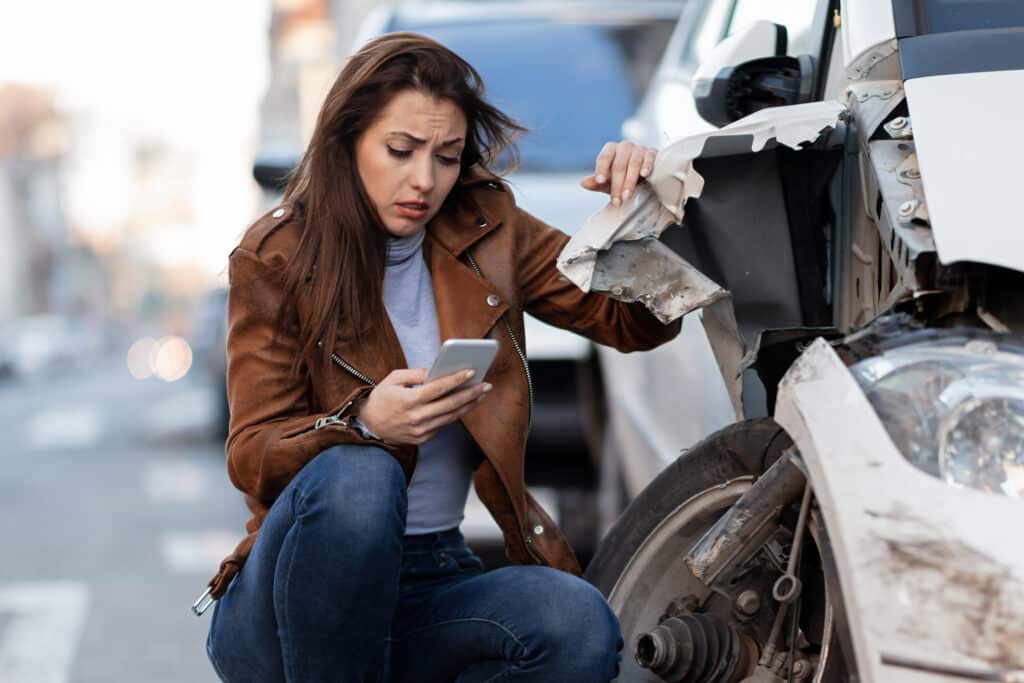
Protecting Your Smartphone Data After an Auto Crash
Taking a few simple steps after an auto accident on the highway or local roads can preserve valuable evidence before it gets lost or overwritten.
Follow these steps to protect the digital record of your accident:
- Take photos and videos at the scene using your phone’s camera. Capture vehicle damage, road conditions, traffic signals, skid marks and visible injuries. Each image will carry a timestamp and, if location services are enabled, GPS coordinates.
- Avoid deleting the accident-related photos, messages or app data from your phone, even after you file an insurance claim. This information may become relevant later in the process.
- Make sure to keep your phone’s location services and motion tracking features turned on. Disabling these settings, even unintentionally, can interrupt the record your device creates.
- It’s also important to back up your phone’s data through cloud storage or a computer backup. Phones get lost, damaged or replaced, and a backup ensures the evidence survives.
- Finally, write down the approximate time of the crash as soon as possible. This detail helps your attorney cross-reference your phone’s timestamps with other evidence, such as traffic camera footage or 911 call records.
How Attorneys Use Smartphone Evidence in Rhode Island and Massachusetts Cases
Rhode Island follows a pure comparative negligence rule, meaning an injured person can recover damages even if partially at fault, with the award reduced by their percentage of fault. Massachusetts applies a modified comparative negligence standard, which bars compensation if the injured person is found more than 50% at fault. In both states, establishing exactly what happened in the moments before and during a crash carries significant weight.
Car accident lawyers in Massachusetts and Rhode Island can request cell phone records and app data from insurance companies, opposing parties and even third-party app providers when necessary to support a claim. This process typically involves formal legal requests, and an experienced attorney knows how to obtain this evidence properly while respecting privacy laws and evidentiary rules.
Digital evidence often works alongside other forms of proof, including police reports, witness statements, medical records and traffic camera footage. Building a complete picture from multiple sources gives your case the strongest possible foundation.
Contact Our Auto Accident Lawyers to Start Preserving Evidence Today
Every auto accident leaves evidence, and that often includes the data quietly recorded by the phone in your pocket. At d’Oliveira & Associates, our auto accident attorneys know how to identify, preserve and present this evidence to build the strongest possible case on your behalf. With 19 office locations across Rhode Island and Massachusetts, we make it easy to get the help you need..
We offer a free case evaluation to review the details of your accident and explain your legal options. If you or a loved one has been injured, call us at 1-800-992-6878 today or request your free consultation online. Our attorneys are available to answer your questions and start building your case right away.

East Providence Personal Injury Lawyer | d’Oliveira & Associates

2540 Pawtucket Avenue
East Providence, RI 02914
(401) 431-1990
Sources
- https://malegislature.gov/Laws/GeneralLaws/PartIII/TitleII/Chapter231/Section85
- https://webserver.rilegislature.gov/Statutes/TITLE9/9-20/9-20-4.HTM

📞 (401) 200-3849 | 🌐 www.good-legal-advice.com