


With elevated speeds, increased traffic congestion and just about every type of vehicle and driver imaginable, driving on any highway remains one of the worst areas to experience an auto accident. It’s no wonder a highway pile-up involves one of the most chaotic and confusing types of crashes you can be involved in. Vehicles come from every direction. Damage stacks on top of damage. And when the dust settles, significant injuries can lead to unaffordable medical bills, and a very urgent question: who is actually responsible for paying when there are so many variables involved?
The answer is more complicated than a standard two-car crash, but it is absolutely possible to pursue compensation. Understanding how liability works in multi-vehicle accidents is the first step toward protecting your rights.
How Liability Works in a Multi-Car Accident
In a typical two-car collision, fault is usually assigned to one driver. In a pile-up, multiple drivers may have contributed to the crash in different ways and at different moments. Rhode Island and Massachusetts both follow rules that allow injured victims to recover compensation from an auto accident even when fault is shared across several parties.
Rhode Island: Pure Comparative Fault
Rhode Island follows a pure comparative fault system. This means your compensation is reduced by the percentage of fault assigned to you, but you can still recover damages even if you are found partially at fault. For example, if you are awarded $100,000 in damages and found 20% at fault, you would receive $80,000.
Massachusetts: Modified Comparative Fault
Massachusetts uses a modified comparative fault rule. You can recover compensation as long as your share of fault is 50% or less. If your assigned fault exceeds 50%, you are barred from recovery under Massachusetts law. This makes it critically important to have an auto accident attorney in Massachusetts building the strongest possible case on your behalf from day one.
Common Causes of Highway Pile-Ups
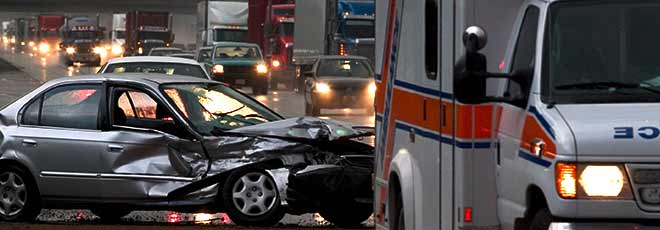
Identifying who caused a multi-car accident requires looking closely at what each driver did in the moments leading up to and during the crash. Common causes include:
- Distracted driving: A driver taking their eyes off the road, even briefly, can trigger a chain reaction at highway speeds.
- Tailgating: Following too closely leaves no room to stop when traffic slows suddenly.
- Speeding: Excessive speed dramatically reduces a driver’s ability to react in time.
- Impaired driving: Alcohol or drug use slows reaction times and impairs judgment.
- Poor road or weather conditions: Wet, icy, or poorly maintained roads can multiply the impact of driver errors.
- Commercial truck negligence: Large trucks carrying heavy cargo require significantly more stopping distance. A truck driver who fails to account for that can trigger a catastrophic pile-up.
Who Can Be Held Responsible for a Multi-Car Highway Pile-Up?
In a multi-car highway pile-up, liability may fall on more than one party. An investigation into your crash may reveal responsibility from:
Multiple Drivers
Each driver in a pile-up may bear some degree of fault. The driver who rear-ended the car that hit yours, the driver who brake-checked several cars ahead, and the driver who was texting at the moment of impact may all share in the liability. Your auto accident claim is evaluated based on the totality of everyone’s conduct.
Trucking Companies
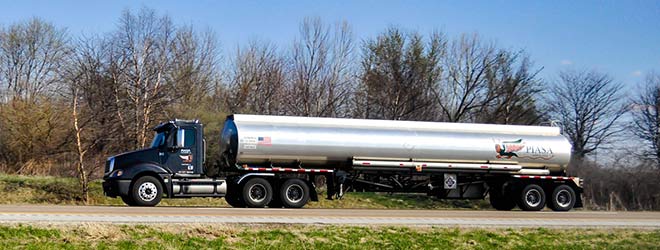
When a commercial truck is involved in a pile-up, the trucking company may be held responsible alongside the driver. Federal trucking regulations impose strict requirements on hours of service, vehicle maintenance, and cargo loading. Violations of those regulations that contribute to a crash can create direct liability for the carrier.
Government Entities
A highway that was poorly designed, had a confusing merge point, lacked adequate signage, or was left unaddressed after reported hazards may bring a government entity into the picture. Claims against government agencies carry specific deadlines and procedural requirements that differ from standard personal injury claims, so acting quickly is essential.
Vehicle Manufacturers
If a defective component, such as faulty brakes, a malfunctioning brake light, or a defective tire, contributed to the crash, the manufacturer of that vehicle or part may be liable under a product liability theory.
What Evidence Is Used to Determine Fault?
Building a successful car accident claim after a pile-up requires gathering the right evidence before it disappears. Useful evidence includes:
- Police reports: Officers at the scene document their observations and often assign preliminary fault.
- Traffic and dashcam footage — Highway cameras and driver dashcams can capture the sequence of events in real time.
- Witness statements — Bystanders and other drivers can provide independent accounts of what happened.
- Electronic data recorders (black boxes) — Most modern vehicles store data about speed, braking, and steering inputs in the seconds before a crash.
- Cell phone records — Records can establish whether a driver was using their phone at the moment of impact.
- Expert accident reconstruction — Professionals trained in crash dynamics can reconstruct the sequence of events using physical evidence, vehicle damage patterns, and road markings.
How Insurance Companies Handle Multi-Car Claims
Insurance companies do not simplify matters in a pile-up. Each insurer involved will conduct its own investigation and push to minimize its policyholder’s share of fault. Adjusters are trained to look for reasons to reduce payouts, and they may contact you early in the process seeking recorded statements.
Giving a recorded statement before consulting an attorney is one of the most common mistakes injured victims make. A statement made in the days after a crash, when you are still processing the trauma, can be used to reduce your compensation later.
Multiple insurance policies may be available to cover your losses, including the at-fault drivers’ liability policies, your own uninsured/underinsured motorist coverage, and commercial trucking insurance if a truck was involved. An experienced personal injury attorney knows how to identify every available source of recovery and pursue them simultaneously.
Types of Compensation Available to Pile-Up Victims
Victims of multi-car highway accidents may be entitled to compensation covering a wide range of losses:
- Medical expenses: Emergency room care, surgery, hospitalization, physical therapy, ongoing treatment, and future medical needs related to your injuries.
- Lost wages: Income you were unable to earn while recovering, as well as reduced earning capacity if your injuries affect your ability to work long-term.
- Pain and suffering: Compensation for the physical pain, emotional distress, and diminished quality of life caused by your injuries.
- Property damage: The cost to repair or replace your vehicle and any other personal property damaged in the crash.
- Loss of consortium: Compensation for the impact your injuries have had on your relationship with your spouse or family.
The Importance of Acting Quickly After a Multi-Car Highway Pile-Up

Evidence in a highway pile-up disappears fast. Traffic camera footage is often overwritten within days. Vehicles are repaired or scrapped. Witnesses move on and memories fade. The quicker an attorney is involved, the sooner steps can be taken to preserve critical evidence, retain accident reconstruction experts, and put insurers on notice.
Acting quickly also protects you from the statute of limitations. Missing the filing deadline means losing your right to compensation permanently, regardless of how strong your case may be.
Hurt in a Multi-Car Pile-Up? Contact Our Auto Accident Attorneys Today
If you or someone you love was injured in a highway pile-up in Rhode Island or Massachusetts, you deserve answers, and you deserve to know your options. At d’Oliveira & Associates, our attorneys have been fighting for injured clients across both states for decades. With 19 offices throughout Rhode Island and Massachusetts, we are in your community and ready to take your call today.
We work on a contingency fee basis, which means you pay nothing unless we win your case. Your initial consultation is completely free. There is no risk in calling us, and there may be a significant risk in waiting. Call our auto accident lawyers at 1-800-992-6878 toll-free or fill out an online contact form for a free case evaluation today. Our attorneys are ready to review the details of your crash, explain your rights, and tell you exactly what we can do to help.
Sources
- https://webserver.rilegislature.gov/Statutes/TITLE9/9-20/9-20-4.HTM
- https://malegislature.gov/Laws/GeneralLaws/PartIII/TitleII/Chapter231/Section85

📞 (401) 200-3849 | 🌐 www.good-legal-advice.com